


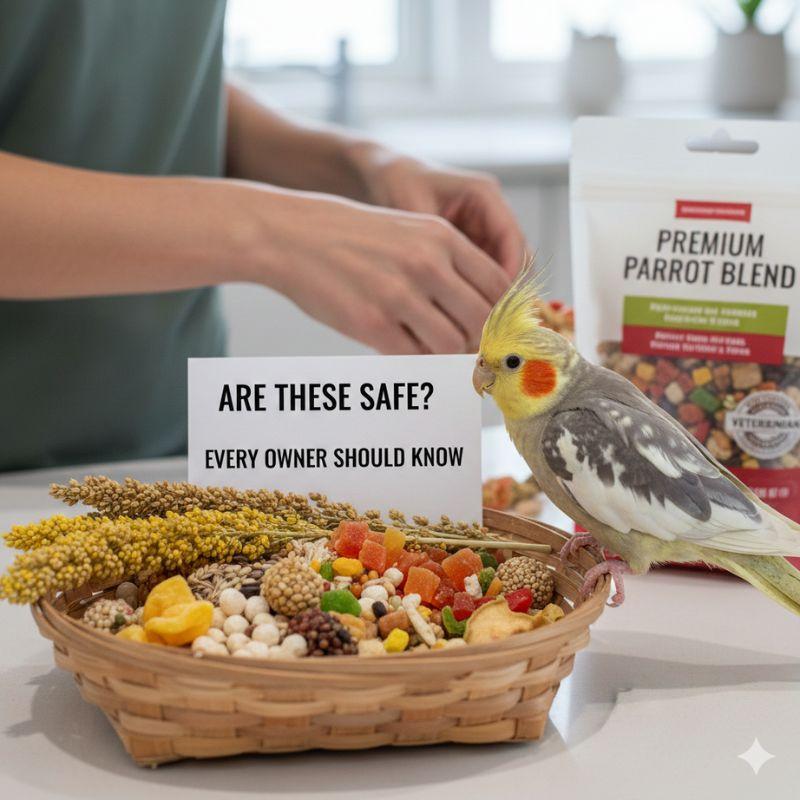
Cockatiels are intelligent, affectionate birds that form strong bonds with their owners quickly. One of the easiest ways to build trust and encourage positive behavior is through treats. However, many bird owners ask the same important question:
Are all cockatiel treats actually safe?
The short answer is no. Some treats that seem harmless or are even sold as bird treats can cause serious health problems if given too often or if they have the wrong ingredients. Knowing which treats are safe is important for every cockatiel owner.
Why Treat Safety Is So Important for Cockatiels
Cockatiels have small bodies and delicate digestive systems. Even small amounts of unhealthy food can lead to long-term issues such as:
-
Obesity
-
Fatty liver disease
-
Nutrient deficiencies
-
Digestive disorders
-
Behavioral problems due to a poor diet
Since treats are usually special foods, birds often like them more than their regular meals. That’s why it’s so important to pick safe treats and give them in the right way.
What Makes a Cockatiel Treat “Safe”?
A safe treat should:
-
Be made from natural ingredients.
-
Contain no artificial colors, flavors, or preservatives.
-
Be low in fat and sugar
-
Complement, not replace, a balanced diet
The best treats help your bird stay healthy and keep their mind active.
Safe and Healthy Cockatiel Treats
1. Seed-Based Treats (Use Sparingly)
Seeds are highly attractive to cockatiels and are commonly found in commercial bird treats.
Safe options include:
-
Millet sprays
-
Canary seed
-
Limited sunflower seeds
Seeds are fun for cockatiels, but they have a lot of fat. It’s best to give them only once in a while, not every day.
2. Fresh Fruits as Natural Bird Treats
Fruits provide vitamins and hydration when served in small portions.
Safe fruits for cockatiels:
-
Apples (remove seeds)
-
Bananas
-
Blueberries
-
Papaya
-
Mango
Fresh fruits are usually healthier than packaged snacks and are some of the best treats for birds when given in small amounts.
3. Vegetables Your Cockatiel Can Safely Enjoy
Vegetables are some of the safest and healthiest treats for cockatiels, but many owners forget about them.
Good vegetable options include:
-
Carrots
-
Broccoli
-
Spinach
-
Kale
-
Bell peppers
These treats help keep your bird’s feathers, digestion, and immune system healthy.
4. Commercial Bird Treats: What to Look For
Not all store-bought bird treats are unhealthy, but it’s important to read the labels carefully.
Choose products that:
-
Are specifically made for cockatiels or small parrots
-
Do not contain added sugar or artificial dyes
-
List whole ingredients clearly
Good quality store-bought treats can be a great choice if you use them only sometimes.
Cockatiel Treats vs Parakeet Treats: Key Differences
Many people think parakeet treats are always safe for cockatiels, but that’s not always true. Some are similar, but not all are the same.
Important differences:
-
Cockatiels need slightly larger seed sizes
-
Some parakeet treats are lower in nutritional variety
-
Certain parakeet treats contain more sugar or fillers
If you use parakeet treats for cockatiels, make sure the package says they are for small to medium birds and do not have artificial additives.
Dangerous Treats Every Cockatiel Owner Must Avoid
Toxic Foods (Never Feed)
-
Avocado
-
Chocolate
-
Coffee or caffeine
-
Alcohol
These foods are poisonous and should never be given to cockatiels as treats or snacks.
Unhealthy Human Foods
-
Bread
-
Chips
-
Cookies
-
Fried or salty foods
These foods have little nutrition and can really harm your bird’s health.
Sugary and Artificial Treats
-
Honey sticks with food coloring
-
Treats with artificial flavors
These treats might look nice, but they are not good choices for your bird.
How Often Should Cockatiel Treats Be Given?
Even healthy treats can cause problems if you give too many.
General guideline:
-
Treats should make up no more than 10% of your cockatiel’s daily diet
-
Use treats mainly for training and bonding
-
Rotate treat types to prevent nutritional imbalance
This rule applies to all bird treats, including parakeet treats.
Homemade Cockatiel Treats: A Safer Alternative?
Homemade treats are often safer because you control the ingredients.
Simple homemade ideas:
-
Chopped vegetables mixed with seeds
-
Fruit and veggie skewers
-
Sprouted seeds
When prepared correctly, homemade cockatiel treats can be healthier than many store-bought options.
Signs a Treat May Be Harmful
Stop feeding a treat if you notice:
-
Sudden weight gain
-
Loose or watery droppings
-
Low energy
-
Loss of interest in regular food
These signs mean that a treat, even if it’s a popular one, might not be right for your bird.
Final Thoughts
Treats should make your cockatiel’s life better, not put their health at risk. By choosing safe, healthy treats, giving the right amount, and staying away from harmful foods, you help your bird stay active, happy, and healthy.
Read More: Are Your Bird Treats Safe? 7 Ingredients Every Bird Parent Must Avoid
Read More: Why Quality Bird Treats Are Essential for Your Pet

 English
 Arabic
 French
 Spanish
 Portuguese
 Turkish
 Dutch
Dutch
 Italiano
 Russian
 Romaian
 Portuguese (Brazil)
 Greek
Greek