
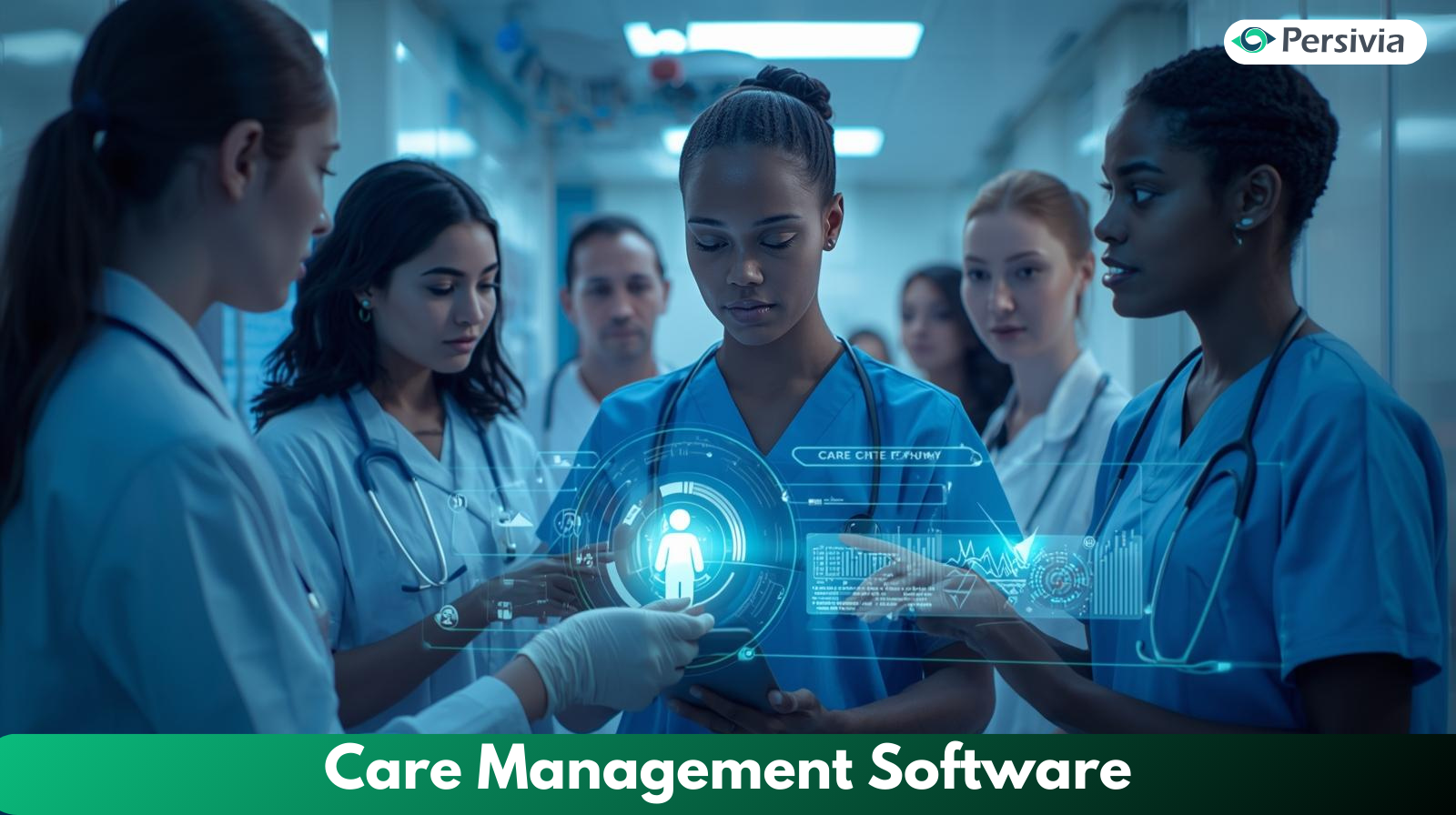
Healthcare staff are under increasing constraints to provide improved services as they are handling an increasing number of patients. The care management software has been the answer to the fragmented systems, scattered patient information, and the overburdened care teams. This technology goes beyond digitizing tasks. It reshapes how providers monitor patients, communicate with them, and guide their care.
The current care coordination requires not just spreadsheets and manual tracking. The teams must have platforms where clinical data is combined with automation of care plans, detection of at-risk patients, and real-time communication. The correct system lowers readmission rates to the hospital, decreases the workload of providers, and ensures no patient is left in the gap. For organizations moving away from outdated systems, it’s important to understand what these platforms offer and how to choose the right one.
What is Care Management Software?
Care management software is an electronic solution that assists care teams in organizing patient care in various environments and with various providers. It brings together patient data, automates clinical processes, and offers monitoring, communication, and intervention tools.
These systems extract information from electronic health records, claims databases, patient information reported by the patient, and connected devices into a single longitudinal record. Care managers can see full histories of patients, monitor care gaps, allocate work, and evaluate outcomes without accessing numerous systems.
Core functions include:
-
Aggregating data from clinical, claims, and social determinants sources
-
Generating personalized care plans based on patient needs
-
Identifying high-risk patients through predictive analytics
-
Facilitating team communication and task management
-
Tracking quality metrics and program performance
Why Healthcare Teams Need Care Management Platforms
The old methods of care coordination are based on phone calls, faxes, and non-connected systems that produce lapses in patient care. Care teams are wasting their hours in search of information rather than concentrating on the patients.
The Problems Teams Face Without Proper Systems
Everything is slowed down by the manual processes. Care managers lose time on entering data in various systems, seeking information about patients, and communicating by phone. The teams are missing crucial information because they are not able to observe the entire picture of a health condition, medications, and recent interactions of a patient.
Key challenges include:
-
Fragmented patient data across multiple systems
-
Delayed identification of deteriorating patients
-
Inability to track care plan compliance
-
Poor visibility into care team activities
-
Limited tools for patient engagement between visits
How the Right Platform Changes Care Delivery
Integrated systems remove data silos and do not depend on repetitive tasks. Care managers can get real-time alerts about patients missing their appointments, not taking their medications, or having warning signs of complications. Teams rely less on back-and-forth calls and emails because shared dashboards keep everyone aligned.
The technology manages the administrative functions, thus allowing the providers to concentrate on clinical decisions. Automated risk scoring of patients requiring urgent care. Care plans are automatically updated as the diagnosis is made or the conditions change.
Key Features That Make Care Management Software Effective
Not every platform provides equal functionality. The best care management software will be an integrated collection of various functions in a single workflow.
Data Integration Across All Sources
Successful platforms combine clinical information using EHRs, payer claims data, patient self-reporting, device data, and social determinants of health into one longitudinal record. Real-time access implies that the care teams will always operate with up-to-date information.
AI-Driven Insights and Analytics
AI tools analyze structured and unstructured data to generate patient-specific insights. They highlight trends that clinicians may miss and flag patients at higher risk of complications.
Personalized Care Plans
Platforms receive data from various sources and automatically compile patient-specific care plans. Such plans can be programmed according to diagnoses, risk factors, and the requirements of the program. Care teams can alter templates or create unique paths to special needs of the patient.
Point-of-Care Integration
The system brings evidence-based guidance directly into provider workflows. Clinicians can quickly see patient-specific recommendations without digging through long protocols.
Risk Stratification Capabilities
AI-enabled risk stratification brings clinical, claims, and social data together to identify patients most likely to face complications. This helps teams focus outreach where it matters most.
Care Gap Identification
The platform will automatically detect clinical and service gaps on a program-by-program basis of value-based care. It indicates the lack of preventive measures, unattended screenings, some problems with medication compliance, and other quality indicators, which should be addressed.
Patient Engagement Tools
Patient engagement tools include mobile apps and portals that support reminders, messaging, and progress tracking. AI helps personalize these interactions and keep communication active between visits. Patients are able to report, fill out surveys, book appointments, and contact their care team on any device.
Workflow Integration
A good platform fits smoothly into existing workflows. Care teams can use familiar processes while gaining better visibility and automation.
Cost and Utilization Analytics
Advanced analytics help reduce care costs by highlighting trends in utilization, emergency department visits, and non-network referrals. Teams will be able to detect costly outliers and prevent the situation before costs grow.
Resource Prioritization
Streamlined workflows help organizations manage care management resources efficiently. Automated task assignment, workload balancing, and productivity tracking ensure teams focus on the highest-impact activities.
Telehealth Capabilities
Integrated telehealth supports virtual video visits and ensures those encounters can be documented and billed when allowed by payer rules. Patients utilize care remotely, and providers record and code visits in the same platform.
Multi-Channel Communication
The communication between the providers and patients is offered in real-time text, audio, and video. All communication is documented in the patient record, which supports continuity and compliance.
Evidence-Based Clinical Content
Strong platforms include extensive evidence-based rules and clinical pathways that guide care for a wide range of conditions. This clinical content base will help care teams adopt the best practices without having to construct all that.
These platforms often include clinical rules based on current guidelines, quality measures, and proven care protocols. Care pathways provide team navigation through complex conditions such as chronic disease management, transitional care, and behavioral health integration.
Measuring Impact: What Success Looks Like
Those organizations that have adopted the use of comprehensive care management platforms have recorded a huge improvement in various metrics.
Reduced Hospital Readmissions
Better coordination and proactive monitoring often lead to lower 30-day hospital readmission rates. Post-discharge patients at risk of complications are identified by the teams and treated before the conditions get out of control and lead to hospitalization.
Decreased Provider Workload
Workflow and automation help to significantly decrease the administrative workload among the care teams. The documentation and data entry take less time, and the providers use the time to attend to the patients directly.
Improved Quality Measures
Identification of care gaps and automated tracking assist organizations in continuously achieving quality standards of value-based contracts. The teams seal greater disparities in preventive care, chronic illnesses management, and transition of care.
Better Patient Satisfaction
Patients who can reach their care teams easily and communicate clearly tend to report higher satisfaction. Planned care minimizes the misunderstandings regarding the treatment plans and the further steps.
Choosing the Right Care Management Solution
Selecting among care management software vendors requires careful evaluation of organizational needs and platform capabilities.
| Evaluation Criteria | What to Look For |
| Integration Capabilities | Connects with existing EHR, claims systems, and other data sources |
| Clinical Content Depth | Pre-built pathways and algorithms based on evidence |
| Scalability | Handles growing patient populations and program expansion |
| Usability | Intuitive interface that requires minimal training |
| Patient Engagement Tools | Portal, app, and communication features patients will use |
| Implementation Support | Vendor provides configuration, training, and ongoing optimization |
| Compliance Features | Meets HIPAA, security, and program-specific requirements |
Questions to Ask Vendors
Before organizations can decide to commit to a platform, they have to know how the system will work within their own environment:
-
How does the platform integrate with our current EHR and other systems?
-
What clinical content comes pre-configured versus what we need to build?
-
How long does a typical implementation take from contract to go-live?
-
What training and support do you provide during and after implementation?
-
How does the system handle our specific value-based care programs?
-
What patient engagement features are included?
-
How do you ensure data security and regulatory compliance?
Implementation Best Practices
Successful adoption requires more than just the software. The organizations require a strategic change management and optimization strategy.
Critical success factors include:
-
Executive sponsorship and clear project ownership
-
Dedicated implementation team with clinical and technical expertise
-
Phased rollout starting with pilot programs
-
Comprehensive training for all user groups
-
Ongoing optimization based on user feedback and outcome data
-
Integration of the platform into daily workflows and standing meetings
-
Regular review of analytics to identify improvement opportunities
Wrap Up
Care management software is reshaping how healthcare teams work by bringing scattered data into one place, automating routine tasks, and supporting coordinated care across the full patient journey. Organizations moving away from manual processes and disconnected systems need platforms that bring data together, guide workflows, and help improve patient outcomes.
Persivia offers an integrated care management platform powered by AI that follows patients throughout their care cycle. Persivia CareSpace® includes a wide range of evidence-based rules and clinical pathways that give providers the guidance they need at the point of care. The platform brings clinical, claims, patient-reported, device, and social data into a single longitudinal record. Its AI and machine learning tools generate patient-specific insights, highlight care gaps, and support value-based care programs. Through features like risk stratification, telehealth, multi-channel communication, and advanced analytics, CareSpace® helps organizations reduce readmissions, ease provider workload, and strengthen care quality.
FAQs
Q1: Does care management software replace our existing EHR system?
No, care management platforms integrate with your existing EHR to pull and aggregate data. They complement rather than replace your electronic health record, adding care coordination and population health capabilities.
Q2: Can small healthcare practices benefit from care management software?
Yes, practices of any size managing complex patients or participating in value-based care programs benefit from better coordination tools. Many platforms offer scalable solutions designed for different organizational sizes and needs.
Q3: How long does implementation typically take?
Implementation timeframes vary from several weeks to several months, depending on system complexity, integration requirements, and organizational readiness. Phased rollouts help teams adopt the platform gradually while maintaining operations.
Q4: Is patient data secure in cloud-based care management platforms?
Yes, trusted suppliers have end-to-end security policies that include encryption, access control, audit trail, and frequent security testing. They adhere to HIPAA regulations and industry best practices of safeguarded health information.
Q5: What kind of training do care teams need to use these platforms effectively?
The needs of training vary according to platform complexity and the role of users. The majority of the vendors do initial training during implementation and after that offer continuous support. The interfaces are user-friendly and help care administration, clinicians, and administrative personnel learn faster.

 English
 French
 Spanish
 Portuguese
 Deutsch
 Turkish
 Dutch
Dutch
 Italiano
 Russian
 Romaian
 Portuguese (Brazil)
 Greek
Greek