


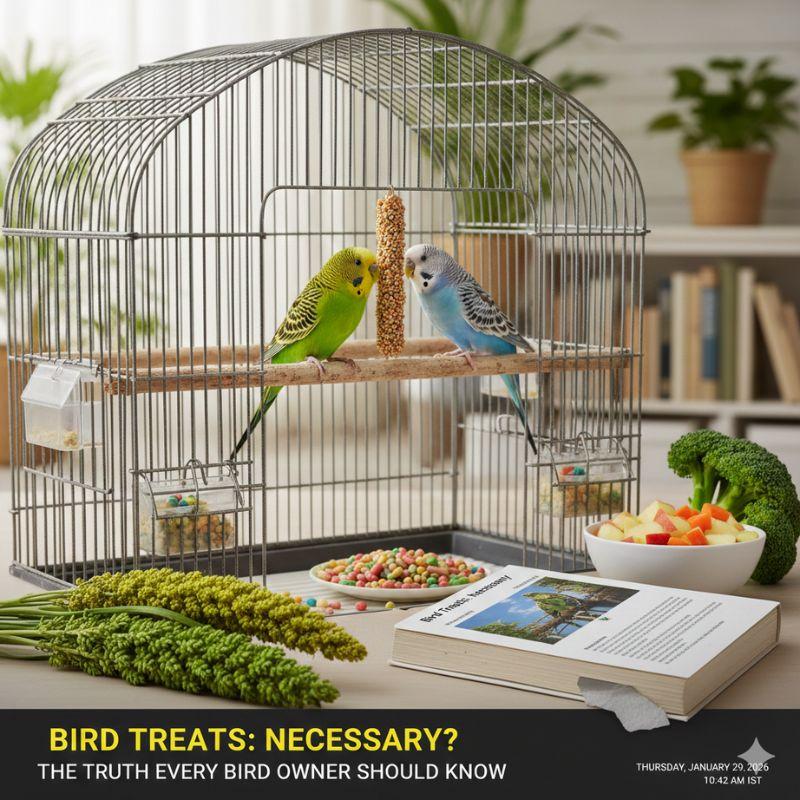
Key Takeaways
- Bird treats are not essential for survival, but they greatly support mental stimulation, training, and bonding.
- Species-specific options like parakeet treats and cockatiel treats help meet unique nutritional needs.
- The best bird treats are natural, low in sugar and fat, and free from artificial additives.
- Treats should complement a balanced diet, not replace daily meals.
- Overusing treats can lead to obesity, stress, and behavioral issues.
Introduction
Bird owners often wonder whether treats are a necessity or simply an extra indulgence. While birds can survive on a well-balanced diet of pellets, fruits, and vegetables, adding the right bird treats can significantly enhance their quality of life. Treats play a valuable role in enrichment, training, and emotional health when used correctly.
Understanding the purpose and proper use of treats helps bird owners avoid common feeding mistakes and raise healthier, happier birds.
What Are Bird Treats?
Bird treats are supplemental foods given occasionally alongside a bird’s regular diet. Unlike daily staples, treats are designed to:
- Reward positive behavior
- Encourage learning and training
- Provide mental stimulation
- Break dietary monotony
When chosen wisely, treats can become a powerful tool for enrichment rather than a nutritional risk.
Are Bird Treats Really Necessary?
While treats are not required for basic survival, they are extremely beneficial for a bird’s mental and emotional well-being. Birds are intelligent animals that thrive on interaction and stimulation. A lack of enrichment often leads to boredom, stress, and destructive behaviors.
Treats help:
- Encourage natural foraging behavior
- Reduce stress and anxiety
- Improve focus during training
- Strengthen the human–bird bond
Used correctly, bird treats support a calmer and more engaged pet bird.
Benefits of Bird Treats for Mental Health
Mental Stimulation
Foraging-style treats encourage problem-solving and physical activity, helping birds stay mentally sharp.
Training & Positive Reinforcement
Using treats during training builds trust and helps birds learn commands and routines faster.
Emotional Bonding
Hand-feeding treats helps birds associate their owner with positive experiences.
Parakeet Treats: What to Know
Parakeets are small, active birds that require lightweight and nutrient-conscious snacks. Parakeet treats should be:
- Small in size
- Easy to chew
- Low in fat
Healthy options include millet sprays (occasionally), fresh greens, and tiny fruit pieces. Portion control is essential to avoid weight gain.
Cockatiel Treats: Smart & Safe Choices
Cockatiels enjoy variety and interactive feeding. The best cockatiel treats are:
- Whole grains
- Cooked legumes
- Small fruit portions
- Limited nuts
Because cockatiels are prone to fatty liver disease, treats should always be offered in moderation.
What Makes the Best Bird Treats?
The best bird treats share a few key qualities:
- Natural ingredients
- No artificial colors or preservatives
- Low sugar and fat content
- Appropriate for the bird’s species and size
Treats that encourage chewing or foraging offer additional mental stimulation.
Treats to Avoid 🚫
- Sugary or honey-coated snacks
- Chocolate or dairy-based foods
- Artificially colored treats
- Highly processed human foods
How Often Should Birds Get Treats?
Treats should make up no more than 10% of a bird’s daily diet.
Best practices include:
- Using treats mainly for training
- Offering them during enrichment activities
- Rotating treat types to maintain interest
Overfeeding treats can cause obesity, nutrient imbalance, and behavioral issues.
Common Treat-Feeding Mistakes
- Replacing meals with treats
- Overusing seed-based snacks
- Ignoring species-specific needs
- Using treats to calm bad behavior
Avoiding these mistakes ensures treats remain beneficial rather than harmful.
Final Thoughts
So, are bird treats necessary?
While they aren’t essential for survival, bird treats are highly valuable for mental stimulation, training, and emotional bonding. When you choose species-appropriate options like parakeet treats and cockatiel treats, and focus on the best bird treats available, you create a healthier and more enriched life for your bird.
FAQs
1. Are bird treats required for a healthy diet?
No, but they greatly support mental stimulation and training when used correctly.
2. What are the best bird treats for training?
Small, healthy treats like millet, fruit bits, or nutrient-rich pellets work best.
3. Are parakeet treats different from other bird treats?
Yes, parakeet treats should be smaller and lower in fat.
4. What treats are best for cockatiels?
Healthy cockatiel treats include whole grains, legumes, and small fruit portions.
5. Can too many treats harm birds?
Yes, excessive treats can lead to obesity, liver problems, and behavioral issues.

 Arabic
 French
 Spanish
 Portuguese
 Deutsch
 Turkish
 Dutch
Dutch
 Italiano
 Russian
 Romaian
 Portuguese (Brazil)
 Greek
Greek