


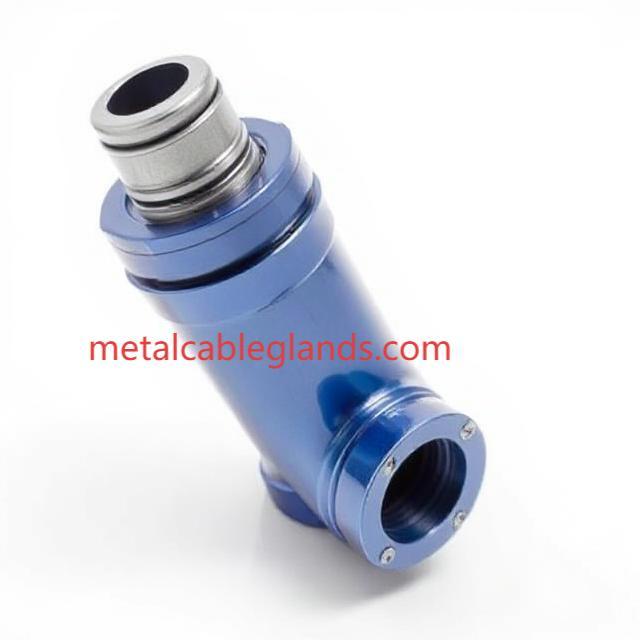
In modern electrical systems, components that provide secure cable entry points are indispensable for maintaining operational integrity. The Conduit Gland serves as a critical interface between conduits and equipment, offering protection against external threats while ensuring stable connections. Professionals across industries rely on these fittings to deliver consistent performance in diverse operating conditions. This piece explores the core functions and performance aspects of Conduit Gland designs, focusing on how they contribute to overall system reliability.
A primary function of conduit glands is to create a robust seal that prevents the ingress of moisture, dust, and other contaminants. This sealing capability safeguards internal wiring from environmental damage, which could otherwise lead to short circuits or corrosion. Advanced designs incorporate multiple sealing rings that compress evenly during installation, forming a barrier that adapts to cable variations. Companies like Zhejiang Hongjuesi Connector have refined this sealing mechanism in their products, emphasizing uniform pressure distribution for enhanced protection.
Strain relief represents another vital function, where the conduit gland anchors the cable firmly to prevent pulling forces from damaging terminations inside enclosures. This feature is particularly important in dynamic setups involving vibration or frequent movement. By gripping the cable sheath without compromising flexibility, these glands extend the lifespan of connections. Zhejiang Hongjuesi Connector integrates specialized clamping systems that distribute forces evenly, minimizing stress concentrations on cable cores.
Grounding continuity is often achieved through metallic conduit glands, which maintain electrical bonding between the conduit and the equipment. This function helps dissipate fault currents safely, reducing the risk of electric shock or fire hazards. In non-metallic versions, alternative methods ensure equipotential bonding where required. The thoughtful engineering behind these grounding features reflects a commitment to safety standards upheld by manufacturers such as Zhejiang Hongjuesi Connector.
Explosion protection emerges as a specialized function in hazardous area applications, where conduit glands are designed to contain sparks or flames within enclosures. These variants incorporate flameproof barriers and precise threading to prevent propagation of explosions. Industries handling flammable gases or dusts depend on this capability for operational safety. Zhejiang Hongjuesi Connector offers explosion-proof models that align with international classifications for such environments.
Mechanical impact resistance plays a key role in performance, allowing conduit glands to withstand physical stresses during installation or service. Robust constructions absorb shocks without cracking or deforming, preserving seal integrity. This durability proves essential in construction sites or heavy machinery settings where accidental impacts are common.
Thermal performance ensures that conduit glands operate effectively across wide temperature ranges, from freezing conditions to elevated heat levels. Materials and designs are selected to maintain sealing properties without becoming brittle or overly soft. This stability prevents leaks that might occur due to thermal expansion differences between components.
Chemical resistance adds another layer of performance, particularly in processing plants exposed to aggressive substances. Conduit glands with appropriate coatings or material compositions resist degradation from oils, solvents, or acids, ensuring long-term functionality in corrosive atmospheres.
Vibration damping capabilities help maintain connection stability in environments with constant motion, such as vehicles or rotating equipment. Specialized inserts or locking mechanisms counteract loosening effects, providing ongoing reliability.
Ease of installation influences overall performance by reducing assembly time and potential errors. Features like quick-lock threads or tool-free assembly enhance usability for field technicians. Zhejiang Hongjuesi Connector prioritizes user-friendly designs that balance speed with secure fastening.
Electromagnetic compatibility becomes increasingly relevant with the rise of sensitive electronics, where certain conduit glands incorporate shielding to block interference. This function protects signal integrity in automation and communication systems.
Cable retention under tension ensures that even significant pulling forces do not dislodge the cable from its termination point. Reinforced armor stops or double compression designs provide superior holding power for armored cables.
Flexibility in accommodating various cable types allows a single conduit gland model to serve multiple applications, from standard power cables to instrumentation lines. Adjustable sealing elements adapt to different outer diameters, offering versatility.
Long-term aging resistance prevents degradation of sealing materials over years of service, maintaining performance without frequent interventions. UV stabilization and oxidation inhibitors contribute to this enduring quality.
Fire retardancy in certain designs limits flame spread in case of electrical faults, providing additional safety in building installations. Halogen-free materials reduce toxic smoke emission during incidents.
Acoustic insulation properties help reduce noise transmission through cable entries in sensitive environments like recording studios or medical facilities.
The combination of these functions creates conduit glands that not only meet basic requirements but exceed expectations in challenging scenarios. Ongoing development focuses on integrating multiple performance features without compromising simplicity.Zhejiang Hongjuesi Connector continually refines these functional aspects to address evolving industry needs. For detailed insights into their range of conduit gland solutions, visit https://www.metalcableglands.com/product .

 Arabic
 French
 Spanish
 Portuguese
 Deutsch
 Turkish
 Dutch
Dutch
 Italiano
 Russian
 Romaian
 Portuguese (Brazil)
 Greek
Greek